
2026 Mitsubishi Outlander: What Engines Are Available?
2026 Mitsubishi Outlander: What Engines Are Available?
Posted on April 6, 2026
The powertrain lineup of a modern compact SUV plays a central role in defining its performance, efficiency, and overall driving experience. In the Mitsubishi Outlander, engine options balance everyday usability with evolving efficiency standards, particularly through the integration of electrified technologies.
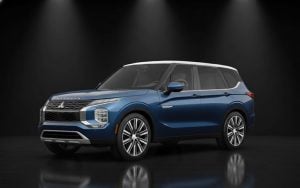
2026 Blue Mitsubishi Outlander
Rather than offering a wide array of unrelated engines, the Outlander focuses on a streamlined lineup built around a conventional gasoline engine and an advanced plug-in hybrid system. This approach allows for consistency in engineering while giving drivers the option to prioritize either simplicity or electrified efficiency.
Overview of the Engine Lineup
The Mitsubishi Outlander is built around two primary powertrain configurations:
- A conventional 2.5-litre gasoline engine
- A plug-in hybrid electric vehicle (PHEV) system with dual electric motors
These configurations share a common platform but differ significantly in how power is generated and delivered.
This dual-approach strategy allows the Outlander to meet a wide range of driving needs, from traditional operation to more advanced electrified performance.
2.5-Litre Naturally Aspirated Gasoline Engine
Engine Architecture
The base engine in the Outlander is a 2.5-litre inline four-cylinder engine.
Key Characteristics
- Naturally aspirated (no turbocharging)
- Dual overhead camshaft (DOHC) configuration
- Variable valve timing
- Multi-point or direct fuel injection (depending on configuration)
This engine is designed for reliability, smooth operation, and predictable performance.
Power Delivery
Without turbocharging, the engine relies on displacement and efficient airflow to generate power.
Benefits
- Linear throttle response
- Reduced mechanical complexity
- Consistent performance across different driving conditions
Efficiency Considerations
The engine is tuned to balance fuel efficiency with adequate power for daily driving.
Transmission Pairing
The gasoline engine is typically paired with a continuously variable transmission (CVT).
CVT Characteristics
- Seamless acceleration without fixed gear shifts
- Optimized engine efficiency by maintaining ideal RPM ranges
- Smooth driving experience
Plug-In Hybrid Electric Vehicle (PHEV) System
System Overview
The plug-in hybrid version of the Mitsubishi Outlander represents a more advanced powertrain configuration. It combines:
- A gasoline engine
- Two electric motors (front and rear)
- A high-capacity lithium-ion battery
- Power electronics and control systems
This setup enables multiple driving modes and improved efficiency.
Gasoline Engine in PHEV System
Role
In the hybrid configuration, the gasoline engine serves as:
- A generator for charging the battery
- A direct power source at higher speeds
- A support system for the electric motors
Efficiency Optimization
The engine operates more frequently within its optimal efficiency range, as electric motors handle lower-speed driving.
Dual Electric Motor System
Front Electric Motor
The front motor works alongside the engine to drive the front wheels.
Rear Electric Motor
The rear motor powers the rear wheels independently, enabling electric all-wheel drive.
Advantages
- Instant torque delivery
- Improved traction
- Precise torque distribution
This dual-motor setup eliminates the need for a traditional mechanical driveshaft between axles.
High-Voltage Battery System
Battery Type
The PHEV system uses a lithium-ion battery pack designed for energy storage and repeated charging cycles.
Placement and Design
The battery is within the vehicle structure to:
- Lower the centre of gravity
- Maintain interior space
- Enhance structural rigidity
Capacity and Function
The battery supports:
- Electric-only driving
- Hybrid operation
- Energy recovery through regenerative braking
Driving Modes in the PHEV System
Electric Mode
The vehicle operates using only electric motors.
Characteristics
- Zero fuel consumption
- Quiet operation
- Suitable for short-distance driving
Series Hybrid Mode
The gasoline engine generates electricity to power the electric motors.
Function
- Engine does not directly drive the wheels
- Electric motors provide propulsion
Parallel Hybrid Mode
At higher speeds, the gasoline engine can drive the wheels directly, with electric motors assisting.
Regenerative Braking Mode
During braking or deceleration, the electric motors act as generators, converting kinetic energy into electrical energy stored in the battery.
Power Electronics and Control Systems
Inverter
Converts direct current (DC) from the battery into alternating current (AC) for the motors.
Converter
Steps down voltage for auxiliary systems.
Hybrid Control Unit
Manages the interaction between engine, motors, and battery.
Responsibilities
- Optimizing energy use
- Selecting driving modes
- Managing charging and discharging cycles
All-Wheel Drive Integration
Super All-Wheel Control (S-AWC)
The PHEV system integrates the Mitsubishi all-wheel control technology.
Function
- Distributes torque between front and rear motors
- Enhances stability and traction
Benefits
- Improved handling
- Better performance on slippery surfaces
- Increased driver confidence
Thermal Management Systems
Engine Cooling
The gasoline engine uses a conventional liquid cooling system.
Battery Cooling
The battery is maintained within an optimal temperature range using dedicated cooling systems.
Motor and Electronics Cooling
Electric motors and power electronics also require thermal regulation to ensure efficiency and longevity.
Performance Characteristics
Gasoline Model
- Smooth and predictable acceleration
- Suitable for daily commuting and highway driving
Hybrid Model
- Instant torque from electric motors
- Strong acceleration response
- Seamless transition between power sources
Efficiency and Environmental Impact
Gasoline Engine Efficiency
Optimized for reduced fuel consumption through advanced combustion control.
Hybrid Efficiency
- Reduced fuel usage in urban driving
- Ability to operate without engine in certain conditions
- Energy recovery through braking
Emissions Reduction
The hybrid system contributes to lower overall emissions compared to conventional powertrains.
Maintenance Considerations
Gasoline Engine
Requires standard maintenance such as:
- Oil changes
- Filter replacements
- Cooling system checks
Hybrid System
Electric components are designed for durability and typically require minimal routine maintenance.
Battery Longevity
The battery is engineered for long-term use, supported by thermal management and controlled charging cycles.
Engineering Philosophy
Simplified Lineup
Focusing on two main powertrains allows for optimized development and reliability.
Electrification Strategy
The inclusion of a PHEV system reflects a transition toward more efficient and environmentally conscious mobility.
Balanced Performance
Both engine options are designed to meet different driving needs while maintaining overall usability.
Real-World Driving Scenarios
City Driving
- Hybrid model maximizes electric usage
- Regenerative braking improves efficiency
Highway Driving
- Gasoline engine provides sustained power
- Hybrid system supports efficiency
Mixed Driving
- Automatic switching between power sources
- Balanced performance and energy use
2026 Mitsubishi Outlander: A Versatile SUV
The Mitsubishi Outlander offers a focused engine lineup that combines a reliable gasoline engine with an advanced plug-in hybrid system. By integrating traditional engineering with modern electrification, it provides a versatile and efficient solution for a wide range of driving conditions.
FAQ Section
What engines are available in the 2026 Mitsubishi Outlander?
- It offers a 2.5-litre gasoline engine and a plug-in hybrid system that combines it with dual electric motors.
Is the Outlander available as a hybrid?
- Yes, it is available as a plug-in hybrid with electric-only driving capability.
How does the hybrid system provide all-wheel drive?
- It uses separate electric motors for the front and rear wheels, eliminating the need for a mechanical connection.
Can the hybrid model run without using gasoline?
- Yes, it can operate in electric-only mode for shorter distances depending on battery charge.
What type of transmission is used in the gasoline model?
- The gasoline engine has a continuously variable transmission (CVT) for smooth and efficient operation.
*Disclaimer: Content contained in this post is for informational purposes only and may include features and options from US or internacional models. Please contact the dealership for more information or to confirm vehicle, feature availability.*