
2026 Mitsubishi Service: What Service to Do in Winter?
2026 Mitsubishi Service: What Service to Do in Winter?
Posted on May 25, 2026
Winter operation introduces specific mechanical, thermal, and environmental challenges that affect multiple vehicle systems. Low ambient temperatures, ice formation, road salt, and reduced traction conditions require targeted maintenance procedures to ensure reliable operation. For Mitsubishi vehicles, winter service focuses on preparing critical systems such as the battery, lubrication, cooling, braking, tires, and electrical components to function within low-temperature ranges and high-load conditions.
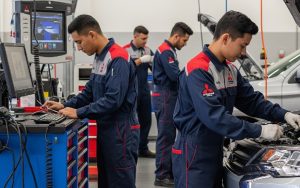
Mitsubishi Service Maintenance
The Mitsubishi Service Strategy
Winter service is a preventive maintenance process designed to adapt vehicle systems to low-temperature operation, typically below 0 °C. At these temperatures, material properties, fluid behaviour, and electrical performance change significantly.
Environmental Factors
- Reduced temperatures affect fluid viscosity
- Ice formation on mechanical and sensor components
- Increased exposure to road salt and moisture
- Reduced tire traction on snow and ice
Each of these factors requires system-specific inspection and adjustment.
Battery and Electrical System
Cold Temperature Effects on Battery Performance
Battery efficiency decreases as temperature drops.
Technical impact:
- Reduced electrochemical reaction rates
- Lower available current output
- Increased internal resistance
At −18 °C, a battery may lose up to 40–50% of its effective capacity.
Battery Testing and Inspection
Winter service includes:
- Voltage check (approximately 12.6 V when fully charged)
- Load testing for cold cranking capability
- Inspection of terminals for corrosion and resistance
Charging System Verification
The alternator must compensate for increased electrical demand.
Additional winter loads:
- Cabin heating systems
- Heated seats and steering wheel
- Defrosters and lighting
Engine Lubrication System
Oil Viscosity and Cold Start Behaviour
Engine oil becomes more viscous at low temperatures.
Effects:
- Increased resistance during startup
- Delayed lubrication of engine components
Winter-Grade Engine Oil
Low-temperature oil grades (e.g., 0W-20 or 5W-30) improve cold flow characteristics.
Benefits:
- Faster oil circulation
- Reduced engine wear during startup
Oil Condition Monitoring
Oil must be inspected for:
- Contamination
- Degradation due to thermal cycling
Cooling System and Thermal Management
Coolant Requirements
Coolant must maintain proper thermal properties in winter.
Typical specifications:
- Freeze protection below −30 °C
- Boiling resistance above 120 °C
Cooling System Inspection
Mitsubishi service procedures include:
- Checking coolant concentration and mixture ratio
- Inspecting hoses and clamps
- Verifying system pressure integrity
Thermostat Functionality
The thermostat regulates engine temperature.
Winter importance:
- Ensures rapid warm-up
- Maintains stable operating temperature
Heater Core Operation
The heater core uses engine heat to warm the cabin.
- Proper coolant flow is required
- Blockages or air pockets reduce efficiency
Tire System and Traction Control
Winter Tire Characteristics
Tires are critical for maintaining traction.
Winter tire features:
- Softer rubber compounds for flexibility below 7 °C
- Tread patterns optimized for snow and ice
Tire Pressure Behaviour
Cold temperatures reduce internal tire pressure.
Approximate relationship:
- Pressure decreases by about 7 kPa per 10 °C drop
Tread Depth and Wear
Adequate tread depth is required for:
- Snow traction
- Water and slush evacuation
Tire Pressure Monitoring System (TPMS)
The TPMS must be recalibrated or monitored to account for seasonal pressure changes.
Brake System Performance
Cold Weather Effects
Braking systems are exposed to:
- Moisture that may freeze
- Corrosive road salt
Inspection and Maintenance
Key checks include:
- Brake pad thickness
- Rotor surface condition
- Caliper operation
Electronic Brake Systems
Systems such as ABS and electronic stability control must be verified.
- Ensure proper sensor operation
- Confirm system responsiveness on low-friction surfaces
Fuel System Considerations
Low-Temperature Combustion
Cold conditions affect fuel atomization and vaporization.
Fuel System Inspection
Mitsubishi service includes:
- Checking fuel lines and seals
- Verifying injector performance
Fuel Moisture Management
Moisture in the fuel system can freeze.
Preventive measures may include:
- Ensuring proper fuel quality
- Maintaining a sufficient fuel level
HVAC and Defrosting Systems
Heating System Functionality
The HVAC system must provide:
- Cabin heating
- Defrosting capability
Defroster Operation
The defroster must:
- Maintain windshield visibility
- Prevent ice accumulation
Cabin Airflow
Proper airflow depends on:
- Blower motor operation
- Clean cabin air filter
Visibility Systems
Windshield Washer System
Winter washer fluid must:
- Remain liquid below −20 °C
- Remove salt and debris effectively
Wiper System
Inspection includes:
- Blade flexibility
- Motor and linkage operation
Lighting System
Winter conditions increase reliance on lighting systems.
- Headlights and taillights must function properly
- Lenses must be free of ice and debris
Suspension and Undercarriage
Corrosion Risks
Road salt accelerates corrosion.
Affected components:
- Suspension arms
- Fasteners
- Underbody panels
Inspection Points
- Structural components
- Bushings and joints
- Protective coatings
Preventive Measures
Regular cleaning reduces salt accumulation and the risk of corrosion.
Drivetrain and AWD Systems
All-Wheel Drive (If Equipped)
AWD systems improve traction in winter conditions.
Inspection includes:
- Differential fluid condition
- Transfer case operation
Traction and Stability Systems
Electronic systems assist in maintaining control.
- Monitor wheel slip
- Adjust torque distribution
Electrical Load Management
Increased Demand in Winter
Electrical demand increases due to:
- Heating systems
- Defrosters
- Lighting
System Capacity
The electrical system must maintain:
- Stable voltage output
- Reliable component operation
Fluids and Sealing Components
Fluid Behavior
All vehicle fluids must remain within operational viscosity ranges.
Includes:
- Engine oil
- Transmission fluid
- Brake fluid
Seal Performance
Low temperatures can cause:
- Reduced flexibility
- Increased risk of leaks
Inspection ensures system integrity.
Safety System Functionality
Electronic Stability Control (ESC)
ESC is critical for maintaining control on slippery surfaces.
Sensor Operation
Sensors must remain:
- Clean
- Free from ice or debris
System Calibration
Proper calibration ensures accurate system response.
Maintenance Scheduling
Winter Mitsubishi service is typically performed:
- Before winter conditions begin
- Periodically during extended cold weather
Operational Outcomes
Reliability
- Improved cold-start performance
- Reduced system failures
Safety
- Enhanced traction and braking
- Improved visibility
Durability
- Reduced wear from cold-related stress
- Protection against corrosion
Understanding these service requirements is essential in technical environments such as Scarborough Mitsubishi, where winter maintenance is based on system diagnostics and environmental adaptation.
2026 Mitsubishi Service FAQ
Why does battery performance decrease in winter?
Low temperatures slow chemical reactions inside the battery, reducing available current and starting capability.
How does cold weather affect engine oil?
Engine oil becomes more viscous, which can delay lubrication and increase engine wear during startup.
Why is tire pressure lower in winter?
Air contracts as temperature decreases, reducing tire pressure by approximately 7 kPa for every 10 °C drop.
What is the role of coolant in winter?
Coolant prevents freezing and maintains stable engine temperature under low ambient conditions.
Which systems are most critical to inspect in winter?
Battery, tires, braking system, cooling system, and HVAC systems are the most critical for safe winter operation.
*Disclaimer: Content contained in this post is for informational purposes only and may include features and options from US or internacional models. Please contact the dealership for more information or to confirm vehicle, feature availability.*