
Mitsubishi Outlander and PHEV: Range and Performance
Mitsubishi Outlander and PHEV: Range and Performance
Posted on October 1, 2025
The Mitsubishi Outlander has established itself as a versatile and capable SUV in the competitive midsize segment. With both conventional and plug-in hybrid variants available, understanding the differences in range, performance, and capabilities between these models becomes essential for prospective buyers.
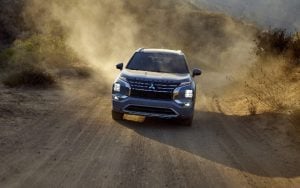
2025 Grey Mitsubishi Outlander
Powertrain Specifications
Outlander PHEV Powertrain
The Outlander PHEV pairs a 2.4-litre naturally aspirated engine with twin electric motors, creating a sophisticated hybrid system. This combination delivers a combined output of 248 horsepower and 332 Nm of torque, providing responsive acceleration and confident performance in various driving scenarios.
What truly sets the Outlander PHEV apart is its innovative powertrain configuration. The system can operate in three distinct modes: EV Mode for pure electric driving, Series Hybrid Mode, where the engine serves as a generator without directly powering the wheels, and Parallel Hybrid Mode, which provides maximum performance.
Standard Outlander Powertrain
By comparison, the conventional Outlander relies on a 2.5-litre four-cylinder engine producing 181 horsepower and 181 Nm of torque. This engine connects to a continuously variable transmission (CVT) that has been refined for the latest model year to deliver improved response and driving dynamics.
For those seeking more capability, the standard Outlander offers retuned steering and updated suspension components that enhance handling precision and ride comfort across a variety of road surfaces.
Range and Efficiency Comparison
PHEV Electric and Combined Range
The Outlander PHEV has a 20 kWh lithium-ion battery that enables approximately 38 kilometres of pure electric driving. This all-electric range makes the PHEV ideal for daily commutes and short trips, eliminating the need for fuel.
When combined with its electric capabilities and the gasoline engine, the Outlander PHEV delivers an impressive total driving range of approximately 420 kilometres. This extended range eliminates the range anxiety often associated with pure electric vehicles while maintaining exceptional efficiency for longer journeys.
In terms of efficiency metrics, the PHEV achieves approximately 3.6 Le/100 km (litres equivalent per 100 kilometres) in combined driving conditions. When operating solely on gasoline, it still manages a respectable 9.0 L/100 km.
Standard Outlander Range and Efficiency
The conventional Outlander relies exclusively on its gasoline engine, achieving approximately 8.9 L/100 km in combined driving conditions. With its 60-litre fuel tank, this translates to a driving range of around 675 kilometres between refuelling stops.
While this range exceeds the total range of the PHEV, the standard Outlander cannot match the plug-in hybrid's efficiency for shorter trips or city driving, where the PHEV electric capabilities significantly reduce fuel consumption.
Charging Capabilities
One of the standout features of the Outlander PHEV is its flexible charging options. Owners can recharge using three different methods:
- **Level 1 Charging**: Using a standard household outlet, the Outlander PHEV can fully recharge in approximately 16 hours. This method is ideal for overnight charging at home.
- **Level 2 Charging**: With a dedicated 240-volt charging station, recharge time decreases significantly to around 6.5 hours, making it convenient for home or workplace charging.
- **DC Fast Charging**: The Outlander PHEV is equipped with fast-charging capability, allowing it to reach 80% battery capacity in just 38 minutes at compatible public charging stations.
This charging flexibility enhances the practicality, allowing owners to adapt their charging strategy based on available infrastructure and daily requirements.
Interior Space and Versatility
Both variants offer generous interior accommodations, though there are slight differences due to the PHEV battery placement.
The standard model provides up to 2,486 litres of cargo space with the second and third rows folded flat. With all seats in place, it offers approximately 331 litres behind the third row, sufficient for everyday items and small luggage.
The PHEV variant sacrifices a small amount of cargo capacity to accommodate its battery system, providing 1,832 litres of maximum cargo space. However, it maintains the same seven-passenger seating capability as the standard model, with no compromise to passenger comfort or space.
Both models feature flexible seating configurations, allowing owners to adapt the interior layout to meet their specific cargo and passenger needs. Whether it's gear for weekend adventures or daily errands, the versatile interior provides the flexibility active lifestyles demand.
Technology and Connectivity
Infotainment and Driver Displays
The Outlander models receive significant technology upgrades. The standard model features a 12.3-inch driver digital cluster paired with an updated centre infotainment screen that offers seamless smartphone integration and intuitive controls.
The PHEV model enhances this technology suite with specialized displays that provide real-time information about energy flow, battery status, and efficiency metrics. These additional features help drivers maximize the hybrid system's efficiency through visual feedback.
Both variants include advanced voice recognition capabilities, enabling natural language commands for navigation, climate control, and entertainment functions without distracting from the road ahead.
Safety and Driver Assistance
Safety remains a priority across the Outlander lineup. Both models include a comprehensive suite of driver assistance features, including forward collision mitigation, lane departure warning, and blind-spot monitoring.
The PHEV adds additional features that leverage its electric architecture, including an acoustic vehicle alerting system that generates sound at low speeds to alert pedestrians of the vehicle's presence when operating in silent electric mode.
Performance Comparison
Acceleration and Response
The Outlander PHEV benefits from the immediate torque delivery of its electric motors, providing responsive acceleration from a standstill. It completes the 0-100 km/h sprint in approximately 9.2 seconds, which feels quicker than the numbers suggest due to the instantaneous electric torque.
The standard model, with its conventional powertrain, requires about 9.7 seconds to reach 100 km/h. While slightly slower on paper, the linear power delivery of its naturally aspirated engine provides predictable performance for everyday driving scenarios.
Handling and Ride Quality
Both Outlander variants benefit from the Mitsubishi Super All-Wheel Control (S-AWC) system, which enhances traction and stability across various driving conditions. The system continuously monitors road conditions and adjusts power distribution to optimize grip and confidence.
The additional battery weight of the PHEV, positioned low in the chassis, contributes to a planted feel and reduced body roll in corners. The standard Outlander, being slightly lighter, offers more nimble handling characteristics, particularly in urban environments where maneuverability is valued.
Practical Considerations for Owners
Maintenance Requirements
The standard Outlander follows conventional maintenance schedules, with regular oil changes and typical service intervals for a gasoline-powered vehicle.
The PHEV requires similar basic maintenance for its combustion engine, though service intervals may be extended due to reduced engine operation when driving in electric mode. However, it does add the complexity of battery system maintenance and eventual battery replacement considerations after extensive use.
Everyday Usability
For daily driving, the PHEV offers the unique advantage of potentially eliminating fuel consumption entirely for shorter commutes. This capability makes it particularly well-suited to urban environments with predictable daily driving patterns.
The standard Outlander, while requiring refueling more frequently, eliminates any concerns about charging infrastructure or planning around battery range. This simplicity may appeal to those with variable driving patterns or limited access to charging facilities.
Make the Right Choice
Selecting between models ultimately depends on individual driving habits, access to charging infrastructure, and personal priorities regarding efficiency and performance.
The PHEV represents an excellent transition option for those interested in electric driving but hesitant to commit to a full electric vehicle. Its ability to operate as either an electric or conventional vehicle provides flexibility that pure EVs cannot match.
For those with longer regular commutes or limited charging options, the standard Outlander delivers reliable performance with no additional infrastructure requirements, while still offering competitive efficiency within its segment.
Regardless of which variant you choose, the Outlander delivers a compelling combination of versatility, technology, and distinctive styling that sets it apart in the competitive midsize SUV segment.
Whether navigating urban streets or exploring scenic routes, the Outlander and Outlander PHEV provide the confidence, capability, and comfort to enhance every journey.
Facts About the Outlander and PHEV
- The Outlander PHEV features a unique powertrain that can function in both parallel and series hybrid modes, essentially working like an extended-range electric vehicle in the latter configuration.
- Despite its compact exterior dimensions, the Outlander manages to offer three rows of seating, making it one of the few vehicles in its segment with genuine seven-passenger capability.
- The Outlander PHEV is one of the few plug-in hybrids on the market that offers DC fast-charging capability, allowing it to reach 80% charge in approximately 38 minutes.
- Both Outlander variants come standard with the advanced Super All-Wheel Control (S-AWC) system, which provides enhanced traction and stability across various driving conditions.
- The Outlander PHEV twin electric motors are positioned at both the front and rear axles, delivering true electric all-wheel drive capability even when operating solely on battery power.
*Disclaimer: Content contained in this post is for informational purposes only and may include features and options from US or international models. Please contact the dealership for more information or to confirm vehicle, feature availability.*