
Mitsubishi Service: What Winter Maintenance Should I Do?
Mitsubishi Service: What Winter Maintenance Should I Do?
Posted on April 27, 2026
Winter conditions place unique stresses on vehicles, affecting everything from battery performance to tire traction and fluid behaviour. Cold temperatures, snow, ice, and road salt can accelerate wear and reduce the efficiency of key systems if you don’t perform proper maintenance. For Mitsubishi vehicles, preparing for winter is not just about convenience—it is essential for safety, reliability, and long-term durability.
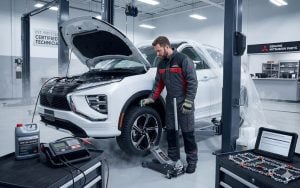
Mitsubishi Winter Service
Modern vehicles have advanced electronics and engineered systems, but they still depend on basic mechanical readiness to perform well in cold climates. A structured winter maintenance approach helps ensure that all components—from the engine to braking systems—operate correctly under harsh conditions.
Mitsubishi Winter Maintenance Requirements
Winter maintenance focuses on systems most affected by low temperatures and reduced traction. These include:
- Battery and electrical system
- Tires and traction systems
- Engine fluids and lubrication
- Braking system
- Visibility systems (wipers, defrost)
- Heating and climate control
Each system must be inspected and, if necessary, adjusted to ensure optimal performance in cold environments.
Battery and Electrical System
Impact of Cold Temperatures
Battery performance decreases significantly in cold weather. At low temperatures, chemical reactions inside the battery slow down, reducing available power.
Key Checks
- Battery charge level
- Terminal corrosion
- Cable connections
Cold Cranking Performance
The battery must deliver sufficient current to start the engine, especially in temperatures below 0°C.
Winter Maintenance Actions
- Test battery capacity
- Clean terminals
- Replace battery if performance is reduced
A properly functioning battery is critical for starting reliability and powering electronic systems.
Engine Oil and Lubrication
Viscosity Changes in Cold Weather
Engine oil becomes thicker at lower temperatures, which can reduce its ability to circulate quickly during startup.
Recommended Considerations
- Use oil with appropriate viscosity rating for winter
- Ensure oil is within service interval
Importance
Proper lubrication reduces engine wear during cold starts, when most engine wear typically occurs.
Cooling System and Antifreeze
Coolant Function
Coolant regulates engine temperature and prevents freezing.
Antifreeze Properties
A mixture of water and antifreeze:
- Lowers freezing point
- Raises boiling point
- Prevents corrosion
Inspection Points
- Coolant level
- Concentration ratio
- Condition of hoses and connections
Maintaining proper coolant composition is essential to prevent freezing and overheating.
Tires and Traction
Winter Tires vs All-Season Tires
Winter Tire Design
Winter tires are engineered for temperatures below 7°C and provide improved grip on snow and ice.
Features
- Softer rubber compounds
- Deeper tread patterns
- Enhanced traction edges
Tire Pressure
Cold temperatures reduce tire pressure. For every drop in temperature, pressure decreases proportionally.
Maintenance Actions
- Check tire pressure regularly (in kilopascals, kPa)
- Inflate to manufacturer-recommended levels
- Inspect tread depth
Proper tire maintenance is one of the most important factors for winter driving safety.
Braking System
Cold Weather Effects
Snow, ice, and road salt can affect braking performance and component condition.
Inspection Points
- Brake pads and discs
- Brake fluid condition
- Brake lines for corrosion
Anti-Lock Braking System (ABS)
ABS helps maintain control during braking on slippery surfaces by preventing wheel lock-up.
Maintenance Importance
Reliable braking performance is critical for safe stopping distances in winter conditions.
Windshield Wipers and Washer System
Visibility Challenges
Snow, ice, and road spray can significantly reduce visibility.
Wiper Blade Condition
Wiper blades should be:
- Free of cracks
- Flexible
- Effective at clearing the windshield
Washer Fluid
Winter washer fluid is designed to resist freezing and remove road grime.
Maintenance Actions
- Replace worn wiper blades
- Use winter-grade washer fluid
- Ensure washer system is functioning properly
Defrost and Heating Systems
Defrost Function
The defrost system removes condensation and ice from windows.
Heating System Role
Provides cabin warmth and supports defrost operation.
Inspection Points
- Heater core performance
- Airflow from vents
- Proper operation of defrost settings
Importance
Clear visibility is essential for safe driving in winter conditions.
Fuel System Considerations
Fuel Efficiency in Cold Weather
Engines may consume more fuel during cold starts and short trips.
Fuel System Maintenance
- Keep fuel tank adequately filled
- Ensure fuel system components are functioning properly
Benefit
Reduces risk of fuel line freezing and ensures consistent engine operation.
Exhaust System
Winter Exposure
Road salt and moisture can accelerate corrosion in the exhaust system.
Inspection Points
- Exhaust pipes
- Muffler condition
- Mounting brackets
Regular inspection helps identify issues early and maintain system integrity.
Suspension and Steering
Road Conditions Impact
Potholes, ice, and uneven surfaces can affect suspension components.
Inspection Areas
- Shock absorbers
- Bushings
- Steering components
Importance
Maintains vehicle stability and handling in challenging conditions.
Lighting System
Reduced Daylight and Visibility
Winter driving often involves low-light conditions.
Inspection Points
- Headlights
- Taillights
- Turn signals
Maintenance Actions
- Replace faulty bulbs
- Clean lenses
- Ensure proper alignment
Good lighting improves visibility for both the driver and other road users.
Emergency Equipment and Preparedness
Recommended Items
- Ice scraper and snow brush
- Warm clothing
- Emergency kit
Importance
Preparedness enhances safety in case of unexpected situations.
Electronic Systems and Sensors
Cold Weather Effects
Sensors and electronic systems must function accurately despite temperature changes.
Systems to Monitor
- Driver assistance sensors
- Camera systems
- Battery-dependent electronics
Maintenance
Ensure sensors are clean and unobstructed by snow or ice.
Seasonal Inspection Benefits
Preventive Maintenance
Addressing potential issues before winter reduces the risk of breakdowns.
System Reliability
Ensures all components function correctly under stress.
Safety Enhancement
Improves traction, visibility, and control.
Real-World Winter Driving Scenarios
Cold Start Conditions
- Engine oil circulation is critical
- Battery performance is tested
Snow-Covered Roads
- Tire traction becomes essential
- Stability systems assist with control
Stop-and-Go Traffic
- Braking system reliability is crucial
- Hybrid systems may rely more on battery performance
Engineering Perspective on Winter Maintenance
System Interdependence
All vehicle systems are interconnected, meaning one weak component can affect overall performance.
Adaptation to Environment
Modern vehicles are designed to handle cold climates but still require proper maintenance to perform optimally.
Longevity and Durability
Regular winter preparation helps extend the lifespan of components.
Mitsubishi Winter Maintenance Section
What is the most important winter maintenance task?
- Checking and maintaining tires is critical, as they directly affect traction and safety on snow and ice.
How does cold weather affect a car battery?
- Cold temperatures reduce battery efficiency and starting power, making it harder to start the engine.
Should tire pressure be adjusted in winter?
- Yes, tire pressure should be checked regularly, as it decreases in cold temperatures.
Why is winter washer fluid important?
- It prevents freezing and helps remove road salt and grime from the windshield.
Does engine oil need to be changed for winter?
- Using the correct oil viscosity for cold temperatures helps ensure proper lubrication during startup.
*Disclaimer: Content contained in this post is for informational purposes only and may include features and options from US or internacional models. Please contact the dealership for more information or to confirm vehicle, feature availability.*