
What Service Is Necessary in Winter for Mitsubishi Vehicles?
What Service Is Necessary in Winter for Mitsubishi Vehicles?
Posted on March 23, 2026
Winter conditions place additional stress on vehicles. Cold temperatures, snow, ice, and road salt affect engine performance, battery strength, braking systems, and visibility. Proper seasonal maintenance helps ensure safe operation and reliable performance during colder months.
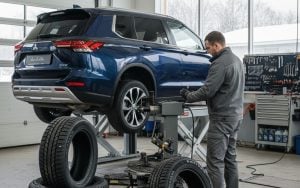
Mitsubishi Winter Tire Service
Battery Inspection and Test
Cold temperatures reduce battery capacity. A weak battery may struggle to start the engine during winter.
A battery service typically includes:
- Voltage test
- Cold cranking performance test
- Terminal inspection
- Corrosion removal
- Secure mounting check
If battery output falls below specification, replacement may be required. Hybrid and plug-in hybrid models also include a 12-volt auxiliary battery that requires inspection.
Engine Oil and Filter Replacement
Engine oil thickens in low temperatures. Using oil that meets the manufacturer viscosity specifications is essential for proper lubrication.
Winter oil service includes:
- Engine oil replacement
- Oil filter replacement
- Leak inspection
Following the manufacturer’s maintenance schedule ensures proper lubrication and engine protection during cold starts.
Coolant System Inspection
The cooling system must protect against freezing in sub-zero temperatures.
Coolant service includes:
- Freeze point test
- Coolant level check
- Hose inspection
- Radiator inspection
Coolant must contain the proper antifreeze mixture to prevent freezing and overheating.
Plug-in hybrid models also include cooling systems for the battery and power electronics, which require periodic inspection.
Brake System Inspection
Winter conditions increase braking demands due to slippery surfaces and exposure to road salt.
Brake inspection typically includes:
- Brake pad thickness measurement
- Brake disc condition check
- Brake fluid level inspection
- Brake line inspection
Salt and moisture can accelerate corrosion. Regular inspection ensures safe stopping performance.
Winter Tire Installation
Winter tires improve traction in snow and ice compared to all-season tires.
Winter tire service includes:
- Tire installation
- Tire pressure adjustment
- Wheel balancing
- Tread depth measurement
Cold air reduces tire pressure. Proper inflation maintains handling stability and braking performance.
For vehicles equipped with Super All-Wheel Control (S-AWC), winter tires on all four wheels help maintain system effectiveness.
Wheel Alignment Check
Snow, ice, and potholes can affect wheel alignment.
Alignment inspection helps:
- Prevent uneven tire wear
- Maintain steering stability
- Improve handling control
If misalignment is detected, adjustment restores proper suspension geometry.
Windshield Washer System Service
Visibility is critical in winter driving conditions.
Service includes:
- Winter washer fluid refill
- Washer nozzle inspection
- Wiper blade condition check
Winter washer fluid prevents freezing in low temperatures. Worn wiper blades should be replaced to ensure clear windshield visibility.
Heating and Defrost System Inspection
Cabin heating and defrost systems must function properly in winter.
Inspection includes:
- Heater performance check
- Defroster airflow test
- Cabin air filter inspection
A clean cabin air filter supports airflow and interior air quality.
Drive Belt and Hose Inspection
Cold temperatures can affect rubber components.
Service includes:
- Drive belt condition check
- Hose flexibility inspection
- Crack or wear evaluation
Damaged belts or hoses may fail in extreme conditions. Inspection reduces risk of unexpected breakdown.
Undercarriage and Corrosion Protection
Road salt accelerates corrosion on metal components.
Winter service may include:
- Undercarriage inspection
- Rust protection treatment
- Fastener and suspension check
Regular cleaning helps reduce salt accumulation and corrosion.
Fuel System Considerations
Cold temperatures may affect fuel system performance.
Recommended actions include:
- Fuel system inspection
- Fuel filter check (if applicable)
- Maintaining adequate fuel level
Keeping sufficient fuel in the tank may reduce condensation inside the fuel system.
Hybrid and Plug-In Hybrid Winter Service
Hybrid and plug-in hybrid Mitsubishi models require additional winter checks.
These may include:
- High-voltage battery inspection
- Battery cooling system check
- Charging port inspection
Low temperatures may affect electric range. Inspection ensures proper system function.
Lighting System Inspection
Winter days are shorter, increasing reliance on exterior lighting.
Inspection includes:
- Headlight function test
- Taillight and brake light check
- Turn signal inspection
Proper lighting improves visibility and safety in snow or low-light conditions.
Emergency Equipment Check
Winter preparation may also include reviewing onboard emergency equipment.
Recommended items include:
- Snow brush and ice scraper
- Reflective safety triangle
- Portable battery booster
- Warm clothing and blanket
While not a mechanical service, preparation supports safe travel during extreme weather.
Tire Pressure Monitoring System Check
Many Mitsubishi vehicles include a tire pressure monitoring system (TPMS).
Winter service may include:
- TPMS function test
- Sensor inspection
- System reset after tire change
Proper system operation alerts drivers to low tire pressure.
Transmission and Drivetrain Inspection
Cold temperatures can affect drivetrain components.
Service may include:
- Transmission fluid inspection
- Transfer case inspection (if equipped)
- Differential fluid check (if equipped)
Proper lubrication ensures smooth operation in low temperatures.
Summary of Winter Service Items
Key winter service tasks for Mitsubishi vehicles include:
- Battery inspection
- Engine oil and filter replacement
- Coolant freeze protection check
- Brake system inspection
- Winter tire installation
- Washer fluid and wiper blade replacement
- Heating and defrost inspection
- Undercarriage corrosion inspection
- Lighting system check
- Hybrid system inspection (if applicable)
These services help maintain vehicle reliability and safety during cold-weather operation.
Questions and Answers
Why is battery inspection important in winter?
- Cold temperatures reduce battery capacity, which may affect engine starting performance.
What tire service is recommended for winter?
- Winter tire installation, tire pressure adjustment, and tread inspection are recommended.
Why should coolant be checked before winter?
- Coolant must have the correct antifreeze mixture to prevent freezing in low temperatures.
Do hybrid Mitsubishi models require special winter inspection?
- Yes, hybrid and plug-in hybrid models require inspection of the high-voltage battery and cooling system.
Why is undercarriage inspection necessary in winter?
- Road salt can accelerate corrosion, so regular inspections help identify and address rust-related issues.
*Disclaimer: Content contained in this post is for informational purposes only and may include features and options from US or internacional models. Please contact the dealership for more information or to confirm vehicle, feature availability.*